Obituary
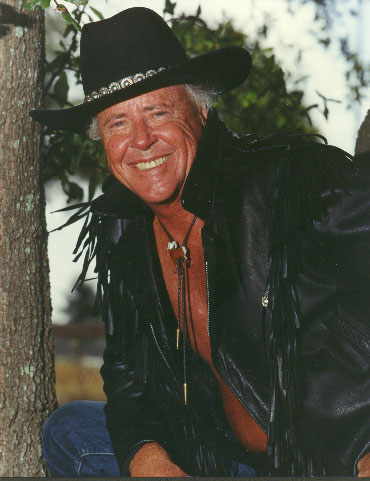
Robert Newton Peck, 92, of Longwood, Florida, passed away at his residence on June 23, 2020. He was born in Ticonderoga, New York, to Frank and Lucille Dornburgh Peck. Robert graduated from Rollins College and served in the U.S. Army during WWII. Robert was an author of 65 books, most notably A Day No Pigs Would Die. He was a true showman and compelling speaker who entertained countless audiences with his jokes, stories, poems, opinions, and his masterful playing of ragtime piano. He is survived by his wife, Sharon Michael Peck, daughter, Anne Dixon, and grandson, Stephen Darios.
YOUNG ADULT FICTION BY ROBERT NEWTON PECK
Arley
Although Arly Poole seems bound to follow in his father's footsteps as a field worker in Jailtown, Florida, where his family lives in 1927 in the shadow of a cruel boss, his world suddenly seems larger when a schoolteacher comes to town. Walker, 1989.
Arly's Run
Arly, an orphan in search of a home and a family, escapes from a brutal migrant labor camp, joins a traveling religious show, and battles a devastating Florida hurricane. Walker, 1991.
Banjo
While doing research for a school essay about a reclusive old mountain man, two boys fall into an abandoned mine shaft from which only the old man can rescue them. Illustrated by Andrew Glass. Knopf, 1982.
Basket Case
Higbee Hartburn, Graffiti Prep's foremost prankster, goes to great lengths to provide the school with a victorious basketball team.
Doubleday, 1979.
Bee Tree and Other Stuff
More than prose and poetry, it is the lyric and tune of a family and a farm. Illustrated by Laura Lydecker. Walker, 1975.
Bro
Florida: 1933. A train, rushing through the night ... a car, stalled in its path ... a boy's life, shattered. Tugwell Dockery hasn't spoken since the horrific events that unfolded one afternoon six years ago at his grandfather's ranch. Now he's back there, newly orphaned, living with his grandfather and gutsy great-aunt. Broda Joe Dockery hasn't seen his brother since his incarceration two years ago at the Pecan County Correctional Labor Camp. Now, realizing Tug must live at the site of a tragedy he witnessed, Broda Joe knows he must be with his brother, even if it means breaking the law and risking his life. Robert Newton Peck writes of grit and courage, and the steel-strong bonds that unite families and endure beyond life itself. Harper Collins, 2004, 160 pp., ISBN: 006052974
Clunie
A teenage boy risks his own popularity to give friendship and support to a retarded girl who is harassed by her classmates. Knopf, 1979.
Cowboy Ghost
Growing up without a mother and with an aloof father on a cattle ranch in Florida in the first part of the 1900s has made Titus very close to his older brother, Micah, and determined to make Micah proud of him when the two go on their first cattle drive together. Harper Collins, 1999.
A Day No Pigs Would Die
To a thirteen-year-old Vermont farm boy whose father slaughters pigs for a living, maturity comes early as he learns "doing what's got to be done," especially regarding his pet pig who cannot produce a litter. Knopf, 1972.
Dukes
An unlikely trio of a deaf-mute Black fighter, his elderly manager, and a young orphan girl travel the Florida countryside putting on fight shows. Pineapple Press, 1884.
Eagle Fur
A story about Abbott Coe, 16-year-old orphan boy, set in the wilds of Canada in 1754 as the French and Indian War brewed across North America. Knopf, 1978.
Extra Innings
A humorous and heartwarming story of how yesterday's baseball diamonds help to mend the crushed leg and battered spirit of Tate Stonemason, a young athlete. Harper Collins, 2001.
Fawn
At the time of the Battle of Ticonderoga in 1758, an Indian boy, the son of a Jesuit priest, observes the savagery of the French, English, and Indians, and tries to save his father from what could be a terrible fate. Little Brown, 1975.
Hallapossa
In a novel of extraordinary beauty and humanity, the author of A Day No Pigs Would Die re-creates a small town in Florida during the Depression and brings to vivid life the varied human beings who populate it. Walker, 1988.
Hamilton
A pig's tremendous appetite proves useful when a wolf invades the barnyard. Illustrated by Laura Lydecker. Walker, 1976.
Hang For Treason
The setting is Fort Ticonderoga in 1775, at a time when tensions ran high between American patriots and British loyalists A young American boy joins Ethan Allen's Green Mountain Boys despite the fact that his Father is a Tory. Doubleday, 1976.
Higbee's Halloween
Life in quiet Clod's Corners changes drastically for Higbee and his best friend Quincy when the very nasty Striker kids move in and Higbee decides to make them the target of a grand Halloween prank. Walker, 1990.
Horse Thief
After losing two fingers in his first bull ride, Tullis Yoder, age seventeen, worries that he'll never have a chance to top another bull. Then the rodeo show he works for goes belly-up broke, and he learns that its thirteen horses - his only family - will be slaughtered for dog food. With the help of a lady doctor and an aging, card-cheating, dice-rolling horse thief (momentarily in jail), Tullis steals his beloved rodeo horses. They travel by night, pursued by crooks, three sheriffs, a powerful judge, and a pretty girl. A rough and rowdy case and a 1938 rural setting add grit and gusto to a fast-moving adventure. Harper Collins, 2003
The Horse Hunters
In 1932 in Florida, despite his older brother's objections, fifteen-year-old Ladd finds himself, through a series of unforeseen circumstances, traveling alone more than 100 miles to bring back wild horses for the rodeo and for breeding. Random House, 1988.
Hub
When their teacher enters the annual Chump's Landing Overland Obstacle Bicycle Race, Horrace Hubert and his best friend Spooner Jitwell do everything they can to make sure she wins the silver trophy. Illustrated by Ted Lewin. Knopf, 1979.
Jo Silver
Sixteen-year-old Kenny's hike through the Adirondacks in search of a writer at Lost Pond becomes a fight for survival as he realizes he is not alone in the hostile wilderness. Pineapple Press, 1975.
Justice Lion
Fifteen-year-old Muncie Bolt thinks he's lost Hem Lion's friendship forever when his father prosecutes Hem's father for operating a still in Liberty, Vermont during the days of prohibition. Little Brown, 1981.
Kirk's Law
A rugged life-style in the Vermont woods with a feisty old hunter called Wishbone Kirk develops the character of a 15-year-old boy.
Doubleday, 1981.
Last Sunday
Twelve-year-old mascot Babe helps her aging friend and pitcher Sober McGinty arrive in time for the antics at Durkee's Lot when two local teams meet for the biggest game of the season. Illustrated by Ben Stahl. Doubleday, 1977.
Little Soup's Birthday
A freak snowstorm almost keeps Rob and his best friend Soup from celebrating Soup's ninth birthday, but the boys' ingenuity makes the party a success. Dell, 1991.
Little Soup's Bunny
Easter is on the way and Soup and Rob are ready. They have a baby rabbit named Bucky who loves to eat carrots, and they are dyeing Easter eggs (and Rob's foot). But putting all your eggs in one basket can lead to trouble. Messy, yellow, smelly trouble! Dell, 1993.
Little Soup's Hayride
Soup and his best pal, Rob are planning to go on a hayride. Rob hopes it's going to be an ordinary hayride, but he should know better when Soup is in charge. There's no stopping the boys as they fly into action. Dell, 1991.
Little Soup's Turkey
Thanksgiving is coming, and Soup and Rob can't wait to perform in the school's holiday play, but mix together a fifty pound turkey, seven sacks of mystery corn, a hot stove, and two stagestruck boys, and what you get is a lot of trouble. Dell, 1992.
Millie's Boy
A novel that begins with a murder on a cold Vermont night. The story of a boy's search for his mother's killer and for his own identity. Knopf, 1973.
Mr. Little
Greatly disappointed that the celebrated Miss K will not be their teacher, Finley Streeter and Stanley Dragavich pull pranks on the new teacher in their small town. Illustrated by Ben Stahl. Doubleday, 1979.
Nine Man Tree
In Depression-era Florida, young Yoolee assumes the responsibility of protecting his family from an unspeakable horror stalking the swamplands. Random House, 1998.
A Part of the Sky
After the death of his father, thirteen-year-old Rob Peck struggles to take charge of the family's small Vermont farm in the face of the financial hardships of the Depression, in the poignant sequel to A Day No Pigs Would Die. Knopf/Random House, 1994.
Patooie
A bishop's wife and a used-car salesman compete in a watermelon seed-spitting contest. Illustrated by Ted Lewin. Knopf, 1977.
Rabbits and Redcoats
In May 1775 two boys participate in the capture of Fort Ticonderoga by Ethan Allen and the Green Mountain Boys and befriend a young British soldier. Illustrated by Laura Lydecker. Walker, 1976.
The Seminole Seed
Set in modern Florida, this is a story about Kirby Tree, a young, talented tennis player. Kirby is the son of Flower Tree, a beautiful unwed Seminole who died in child-birth. He's raised in the traditional way in the Florida swamp by his grandfather and his devoted uncle Little Man Tree. Pineapple Press, 1983.
Soup
Rural Vermont during the 1920s is the setting for this nostalgic (series) of episodes in the lives of young Rob Peck and his pal, Soup. Soup is the first book in the series. Illustrated by Charles Gehm. Knopf, 1974.
Soup 1776
In May 1775 two boys participate in the capture of Fort Ticonderoga by Ethan Allen and the Green Mountain Boys and befriend a young British soldier. Knopf/Random House, 1995.
Soup Ahoy
A radio contest, the impending visit of actor Sinker O. Sailor to their small Vermont town, and rumors of a black pearl in Wet Lake spur Soup and Rob on to a spectacular nautical disaster. Delacorte, 1994.
Soup & Me
The further adventures and misadventures of Rob and Soup, two boys growing up in a small Vermont town. Illustrated by Charles Lilly. Knopf, 1975.
Soup for President
Rob manages Soup's campaign for class president in their small Vermont town. Illustrated by Ted Lewin. Knopf, 1978.
Soup in Love
As Valentine's Day approaches their Vermont town of Learning, Soup and Rob experience several forms of love. Delacorte, 1992.
Soup in the Saddle
Anticipating the celebration of Miss Kelly Day in honor of the teacher of their one-room school in Learning, Vermont, Soup and Rob save the day from certain catastrophe at the hands of Dr. Elsa Pinkerton Uppit. Illustrated by Charles Robinson. Knopf, 1983.
Soup on Fire
Rob and Soup set in motion a wild scheme to catch the eye of the Hollywood talent scout visiting their small Vermont town. Illustrated by Charles Robinson. Delacorte, 1987.
Soup on Ice
Rob and Soup engineer an incredible appearance by Santa and his sleigh in their small Vermont town. Illustrated by Charles Robinson.
Knopf, 1985.
Soup on Wheels
Rob and Soup vie for the prize in their town's "Vermont Mardy Grah." Illustrated by Charles Robinson. Knopf, 1981.
Soup's Drum
Rob totes Soup's huge drum through the Fourth of July parade before he realizes Soup hasn't carried his share. Before the close of the celebration Rob gets even. Illustrated by Charles Robinson. Knopf, 1980.
Soup's Goat
Clean and tidy cousin Sexton lends his unusual talent to Soup and Rob as they engage in the town's goat-cart race. Illustrated by Charles Robinson. Knopf, 1984.
Soup's Hoop
Soup's crazy plan to help his town's basketball team to victory includes constructing a musical instrument called a spitzentootle and snaring the evil Janice Riker in an unpleasant trap. Illustrated by Charles Robinson. Delacorte, 1990.
Soup's Uncle
A visit from Uncle Virus and his motorcycle gang stimulates Soup to new and ingenious schemes, involving a cache of moonshine, a motorcycle competition, and revenge on the dreaded Janice Riker. Illustrated by Charles Robinson. Delacorte, 1988.
Spanish Hoof
The year she turns twelve on Spanish Hoof, her family's beloved ranch in Florida, Harry gets a pony and learns some hard lessons about life.
Knopf, 1985.
Trig
A young girl living on a Vermont farm relates the events of the day her uncle brought her a genuine "Junior G-man machine gun." Illustrated by Pamela Johnson. Little, Brown, 1977.
Trig Goes Ape
Trig gets in on an uproarious melee when Buck Fargo's Wild Ape and Monkey Show comes to town. Illustrated by Pamela Johnson.
Little, Brown, 1980.
Trig or Treat
Assisted by her friends costumed as Samson and Gideon, frecklefaced Trig masquerades as the seductive Delilah for the church Halloween costume pageant. Illustrated by Pamela Johnson. Little, Brown, 1982.
Trig Sees Red
An official Junior G-man takes matters into her own hands when Clodburg's only uniformed policeman is replaced by a traffic light. Illustrated by Pamela Johnson. Little, Brown, 1978.
Wildcat
Follows the activities and adventures of a wild city cat from her birth until she mates and produces a litter of her own. Illustrated by Hal Frenck. Holiday House, 1975.
NON FICTION BY ROBERT NEWTON PECK
HOW to Write Fiction Like a Pro - A Simple-to-Savvy Toolkit for Aspiring Authors
In HOW to Write Fiction Like a Pro: A Simple-to-Savvy Toolkit for Aspiring Authors, provides emerging writers with the power tools they need to start building their own books. Readers will learn everything from pacing a story and writing dialogue that flows to molding the tangible "stuff" of life into the characters and storylines of fiction. HOW is written in the straightforward, earthy, and humorous voice that fans of Rob's fiction have come to know and love. Informative but not preachy, HOW's lighthearted style immediately engages readers, inspiring them to take up the tools and write from their own lives and their own strengths. Learning isn't a load. It's laughter. Aspiring authors are sure to learn-- and laugh-- as they discover HOW to Write Fiction Like a Pro. Maupin House, 2006
Weeds in Bloom: Autobiography of an Ordinary Man
With over 65 books to his name, including the classic A Day No Pigs Would Die, Robert Newton Peck has enjoyed an illustrious writing career. Now, in an autobiography as unique as he is, Peck tells his story through the people who've shaped his life: a nameless man who shovels coal for the freight train, a farrier with a penchant for early breakfasts, a homeless boy who learns to play piano by ear, a grizzled backwoodsman, a panther-hunting Seminole, a Jamaican sugar-cane cutter. Rough-cut and unpolished, they are what Peck would call plain folk, the country's poor and uneducated. In this extraordinary autobiography of a self-proclaimed ordinary man, Robert Newton Peck gifts us with a treasury of quiet wisdom and humble understanding. It is a rare glimpse not only into the author's life but also into the lives of those who too often go unseen and unheard. Random House, 2005.
My Vermont II
Prose and poetry of Peck's farm life, plus humor, bits and pieces. Peck Press, 1988.
My Vermont
Prose and poetry of Peck's farm life, plus humor, bits and pieces. Peck Press, 1985.
Fiction is Folks: How to Create Unforgettable Characters
Its purpose is to convince you that it is not plot, but character that makes your story glisten. It will show you chapter by chapter, how to flip over a rock and find folks for your fiction. Writer's Digest Books, 1983.
Secrets of Successful Fiction: A Fun-to-Read, Easy-to-Master Toolkit for Writers of All Ages
Primarily a book on style. Several chapters touch on characters and how they work for you. Writer's Digest Books, 1980.
Path of Hunters: Animal Struggle in a Meadow
Describes the behavior of a variety of common field, wood, and water animals emphasizing their interdependency for survival. Illustrated by Betty Fraser. Knopf, 1973.
SOMETHING ABOUT THE AUTHOR
The following information about Robert Newton Peck is from Something About the Author, Volume 108, pages 170-184, published by the Gale Croup Incorporated and included here with Gale's permission.
Soup's Best Pal
It began with a woman. Everything worthwhile does. Her name was Miss Kelly, and she taught first, second, third, fourth, fifth, and sixth in a tumble-down, one-room, dirt-road school in rural Vermont.
She believed in scholarship, manners, and soap.
But more, she believed in me. In all of us, telling us that in America you don't have to be what you're born. Haven Peck, my father, killed hogs for a living. Hard work, but he was a harder man. Like all hard men, he was kind, quiet, and gentle. I wanted to be like Papa, yet I wasn't sure I'd grow up only to kill hogs.
"Robert," said Miss Kelly, "perhaps you'll surprise us all, and amount to something."
It was years later when somebody pointed to a large building and said, "That's a library." I didn't believe it, because in Miss Kelly's little one-room school, we all knew what a library was. Not a building. It was a board. A three-foot-long shelf in the corner, a plank, upon which sat our few precious worn-out books. According to custom, we washed our hands before touching them.
So there we sat in her school, soldier straight, learning about people like Mark Twain and Calvin Coolidge, and Ty Cobb and Charles Lindbergh and Booker T. Washington.
We were the sons and daughters of illiterate farmers, millworkers, and lumberjacks. Some of the folks, in town, called us uproaders. And we called them downhillers. But I knew they could do what I had me an itch to do.
They could read.
Sometimes, at home, a learned scholar would stop by, and he was always asked, following supper, to read to our family. There was only one book in our mountain home. It was black and large, yet we never referred to it as our Bible. It was known only as The Book.
Then, after I'd fetched it, the clerk of the local feed store in town (if he happened to be our guest) would read to us. Mama's usual favorite was Isaiah, especially the part about swords into plowshares and spears into pruning hooks.
We listened.
The grown-up people nodded their heads, as if absorbing and agreeing with whatever verses were being read. As an interesting aside here, you might be surprised to learn that a neighbor of ours named his two sons Chapter and Verse.
At school, our teacher Miss Kelly read to us by the hour. She gave us Tom Sawyer and The Wind in the Willows and Ivanhoe, in an effort to lead us from the bondage of ignorance and poverty.
She earned her thirteen dollars a week.
I was the youngest of seven children, yet the first to attend any school. Papa and Mama had opposed my going. Yet when I finally introduced Papa to Miss Kelly, initially he said nothing. But he took off his hat.
"Thank you," Miss Kelly told my father, "for giving me Robert. I shall try to be deserving of your trust."
"We hope he's got manners," Papa told her with a straight face. "And whatever he breaks, we'll pay for.
Miss Kelly smiled.
At school, I met Soup.
He was a year and four months older than I was, and became my best pal. When a boy has a best friend, he's the richest kid on Earth. His real and righteous name was Luther Wesley Vinson, and he grew up too, to become a minister.
It's only honest to admit here, as an aside, that when I was in college I seriously considered becoming a minister . . . in order to become the first Protestant Pope. However, upon viewing my character (or lack of it) I decided I was unworthy. Were I a preacher, my worry would be that my flock might harken to some of my eccentricities and be like me. But today, were I a minister, I would fight pro-left organizations such as the National Council (and World Council) of Churches.
During much of my so-called mature life, I've protected my soul and my wallet by avoiding doctors, lawyers, and the clergy. Yet three of my closest and dearest cronies all became ministers . . . Hank Gooch, Fred Rogers, and Soup Vinson.
The Vinsons lived uproad from the Pecks. And most times, Soup and I were nothing but trouble, to everyone in our path.
He started it, and I usually caught the blame, and often Miss Kelly's ruler. She didn't have to fill out a form, or assemble witnesses, in order to whack a kid. Those were the sensible days in education. One ruler was worth a dozen rules.
Somehow, both Soup and I came to realize, as our behinds were smarting, that Miss Kelly was our ticket out of a sewer, or a manure pile. She was a small and resolute candle, flickering in darkness, proud to be a teacher, prouder still of all we learned.
"Teachers and farmers," Miss Kelly once in-formed us, "are alike. But I'm luckier, because a farmer has to go to his garden. My garden comes to me."
We were the young, the green, the growing. Buds of life, opening to her warmth, her sunshine, and her strength. She called us "her flowerbed of pansy faces." We were hers, we knew, and she was ours. In her shoddy clothes, she stood ramrod straight, instilling in us all the sterling, character-building Vermont virtues and values.
She liked me the best.
Every kid thought the same. Now you know why Miss Kelly deserved to bear that most noble of titles: Teacher.
As a first grader, I viewed our Miss Kelly as being very tall. As years flew by, she magically grew shorter. When, at age nineteen, I came home from Europe and World War II, she was almost tiny. She rushed up to me, hugged me with her thin little arms, and said, "Praise God."
Everyone in the county called her Miss Kelly.
Lots of people bowed to her as she passed, holding her head up high, a patrician among peasants, a beacon in their darkened world. One of the toughest brawlers in town, a man named Buck Dillard, a lumberjack, always brought her a dressed capon for Christmas.
He had never attended school. Yet local rumor held that Miss Kelly had, one evening, taught Buck Dillard to write his name. He sported a big, mean wood-hook scar across his face and had a slightly crippled hand which had been crushed beneath a log. Some folks claimed there was little good in him. Others claimed none.
Buck weighed close to three hundred pounds, and for some strange reason, nobody kidded him much. Not even when he silently sobbed at Miss Kelly's funeral.
She died at age ninety-seven. For me, this was difficult to believe, because when we were her pupils, Soup and I both suspected that Miss Kelly was at least 144. I am most thankful that she lived to share in my success as a writer. I've dedicated more than one book to her, and she became almost as proud of me as I will ever be of her
Dedications, in the front of a book, offer readers an insight into what an author believes and holds dear. Clunie, my short novel about a retarded child, bears a dedication which reads as follows:
"This book is dedicated to kids who will never read it, hoping that the kids who can will care."
Writing is not showing off with big words. Nor is teaching. The dearest rabbi who ever lived, a Nazarene carpenter, preached of little things in common terms . . . loaves and fishes, a camel passing through the eye of a needle, a mustard seed. Tangibles.
Stuff, not abstracts.
My latest novel, Jo Silver, is dedicated to a remarkable woman, elderly only in years and winters, whom I met on a Montana mountain, a lady this author shall ever remember. Her name is Sally Old Coyote.
Dedications are gestures of thanks.
Soup is dedicated "to the Reverend Luther Wesley Vinson, a shepherd of his flock, from his first sheep."
Other pals warrant a salute.
Banjo pays tribute to a college buddy, who was my best man when I married Dorrie, my favorite librarian. "I dedicate this book to a great guy who will always be my pal . . . and I'll always be his . . . Fred Rogers." Yes, you're right, TV's famous Mister Rogers
Fred and I don't see eye-to-eye on anything. You name it, we differ on it. Yet we've always been able to disagree without becoming disagreeable. Pals forever.
That is America.
We are God's garden of variety, in color, race, and creed. How dismal life must be to live in a country where there's only one political party, one origin, or one faith.
In the summer of 1984, in Los Angeles, we Americans all held a party for the entire world, the Olympic Games. (Russia didn't come. No matter, as Communists never enjoy anything and seldom grin.) What I liked best was watching two athletes hug each other, one white and one black, or one from Japan and one from Brazil, and a Frenchman hugged a German!
It was a blend of music, fun, excellence. People smiled and praised one another, a party of human brotherhood and sisterhood.
In my opinion, now that we've seen what works and what doesn't, we ought to dissolve the United Nations, and instead, hold the Olympic Games every year or two. We'd replace talk with action, mediocrity with excellence; and best of all, replace hatred with friendship. Sure, I was rooting for our USA kids. But when that courageous Belgian boy rolled over the finish line in his wheelchair, the world cheered.
Oh, I love our USA. I'm the corniest flag-waving patriot ever to skip along the pike. If you can't find scores of things, and folks, to admire in these United States, then perhaps loving is beyond your reach and grasp.
For example, take Early Pardee.
His real name was Earl. He was illiterate, as so many wise and poetic mountain people are.
Early Pardee and I were hunting, one cold day in Vermont, resting, our backs against spruce trees and sitting in snow. Two red foxes were dragging a dead snowshoe hare across a white meadow. It was too dog-gone beautiful to raise a gun and cut down.
Early spat out a brown stream of Red Man, and spoke. "Ya know, Rob . . . them snowshoes be the bread of winter."
It was true, what Early Pardee said, because all of life is predatory. Roots of a tree clutch at earth the way the talons of a hawk stretch for an unwary rabbit. Even a carrot is a predator, one orange talon, stabbing into the earth to seek that which is not yet its own.
Unfortunately, we now smother in a world of law, much of which (civil law and canon law) is enacted by senile males, in churches, courts, and legislatures. Divine Law is all that really counts, law ordained by God and practiced by Nature.
Today, trouble is, we're all up to our vulnerable wallets in lawyers. We citizens want less law, and more referenda. Lawyers dominate Congress, lobbies, government bureaus, state legislatures, city and town councils, and our courts. I hold even less respect for judges. In short, lawyers should practice the law, but should not be allowed to determine which laws are enacted, many of which benefit themselves.
No lawyer should run for office. We ought to board-up all law schools for at least twenty years. Laboratory experiments should use lawyers instead of white mice, as lawyers multiply more rapidly, and are less loveable.
We citizens are always warned: "You can't take the law into your own hands." Poppycock! This is exactly where law belongs, in our hands, not in the hands of lawyers and judges.
Now then, on to more pleasing matters.
Earth, our beautiful planet today has only one problem. Excess human population.
This dreaded disease, human pregnancy, is the mother lode which spawns disease, poverty, litter, crime, animal annihilation, and war. Not to mention traffic, or din.
Because of this mire of people, which I dub peoplution, our animals are dying. Whale, panther, moose, bluebird, even our American eagle is endangered.
Human life is no more sacred than all of life. Morality, therefore, is acreage per head, for all of Earth's bio life. As I write these words, there is mass starvation in Africa, and today's newspapers abound with heart-wrenching photographs of emaciated children.
Nature's corrections are always massive, occurring without pity. Horrible, yet because of this starvation, many other forms of life will survive in Africa, and future generations may hopefully prosper. Perhaps it is part of some unknown Divine Order which a mortal mind cannot, or will not, comprehend.
Religion and sociology save no life. Only our Earth's biology has that honor
God's will cannot be fairly translated into human words. To humanize God is demeaning. Prayer should not offer God direction, only gratitude, for a brutal beautiful natural balance created to work so well. "In the beginning, God created." We did not. Ergo, we best not criticize Divine Order, its drought, or its rain.
I wish not to improve the world. Instead, to give thanks I'm allowed to be part of it, a very insignificant part.
Even though I work as a writer, and speaker, it's a pity that language, was invented. It's fouled religion. God's purpose should not be etched into words, and Moses erred in herding us, like sheep, down that dreadful wordy path
My own Bible is often read.
I thankfully accept God's rain and rainbow, God's leaf and tree. But if you tell me God spoke in words, I'm changing my pew. Blue Goose, a red Huron warrior, once said that he had never seen God; yet whenever he looked at a sundown sky, he knew that God sees Blue Goose.
God and sunsets are best absorbed by silent unspoken feelings of gratefulness, not described by the paltry and petty words of prophets or authors or priests or preachers, or nuns, or nitwits like me.
The future of our planet Earth depends on women, not warriors. The soil we walk upon is not neuter. Earth is female. Pour seed into her and she bears fruit. The atmosphere which surrounds Earth, however, is male. The wind carries pollen, seed, and spore. Sometimes by a bee or a bird.
Advice to Women: For a sweetheart, choose a physically strong man. He will be secure in his manhood to be tender, gentle, delicate. Only the unproven sissy will bully you. Manhood, like trees, is rooted in soil. If you are a woman, beware of a man who does not yet own land.
You know who taught me a few things?
Ed Nocker.
I met Ed away out in the middle of nowhere, in our Florida Everglades. He was dumping a mixture of acorns and corn mash onto the ground. I asked him why. Answer, to capture some wild hogs. "All I do," Ed said, "is git 'em lazy enough to depend on me. Soon as that happens, they're my slaves."
What he told me, I thought, applies to citizens and government. So I told Ed I'd someday write about him. Thus I have, but I won't send him this article. Ed can't read.
But he sure can cook possum.
When I met Ed, his mule, Esme, had just died. Only mule he'd ever owned who would lift up a hoof to shake hands. He showed me the harness he'd made for her, then a mound of fresh amber sand he'd dug for her, under which she lay buried.
That, my friends, is the core of research for a writer, or for anyone curious to learn.
Research is a dirt road!
It is getting off pavement to find the Ed Nockers of America, rural sachems of distant domains, unwashed, unread, yet rarely unwise. Don't go to talk. Go to listen. Meet enough Eds, and you'll be EDucated.
Speaking of the Florida outback, land, and hardy folk (human or mule), I just finished a novel about a Florida cattle ranch, and a determined and scrawny little widow trying to raise calves and children. Ed Nocker would respect Violet Beecher and maybe so will you. Spanish Hoof is a book I'm proud to author.
There's music in it too.
Not surprising, as so many of my books feature a simple song or two which I've composed. I play self-taught ragtime piano, by ear, sometimes by fingers. To get raised as an uproader country boy means you've been treated to a spate of toe-tapping tunes.
We had us a near and dear neighbor, Miss Haddie, who'd sit barefoot on a half-broke, front-stoop rocking chair, and plunk a banjo which she'd fashioned by her own two hands. Miss Haddie (can't recall her final name) could almost make her banjo go out and bring in the mail. Or so it sounded to Soup and me, her fan club.
Music enters a child's soul, not his mind. It enters through an ear, not an eye. Even today, a sheet of music looks to me about as easy to savvy as a page in the Tokyo phonebook.
Some of the most spiritual and rewarding moments of my fun-packed life occurred when I sang lead in three barbershop quartets. A lead singer has to snarl out the most authoritative part, and he's also usually the best looking. Names of barbershop quartets are always fun. We were the Humbugs, the Deep Throats, and the Broadjumpers.
We were beer, cigars, outrageous macho jokes, and best of all, buddies. Dave, Pete, Don . . . I miss y'all more than remembering can abide, or a heart can hold.
Rob Peck is a sentimental slob.
Soon, I intend to attempt a book about many of the people who have so enriched my life. Not celebrities, not just common folk. Peasants, like me. Lumberjacks, farmers, hermits, ladies like Miss Haddie and Sally Old Coyote, men like Buck Dillard and Ed Nocker and Early Pardee. Their wit and wisdom ought to get shared as well as remembered.
A man keeps only what he gives away.
Whoa!
Hold it right there. My book won't be free. I'll sweat to write it and you'll sweat to buy it. America's fount is human sweat. Government cannot create wealth. Our fortunes are created by selling goods and services to each other. The brighter a person is, the more he wants to stand independent, and shun federal aid.
Pick any nonprofit governmental institution and you've got a pigsty mess. God sure did a nifty thing creating greed.
Too abrasive a word? Okay, then aspiration.
That's when the son of a pig butcher worked toward becoming an author. And if Miss Kelly said it was okay, it's okay. America, in the long run, must reward brains, guts, and ambition or stupidity.
Complainers and gripers rarely amount to squat. They're usually too occupied with wailing about people who are busily handling the chores.
Speaking of chores, work is a solid thing to believe in. Vermonters usually do. Granite folk on granite land. Much like their statues in village squares, they are the granite sentries of liberty, standing free.
Sure, I remember the guys I played on teams with, and drank beer with, and sang with ... but I don't guess I remember them any more fondly than the men I worked alongside. Farmers, lumberjacks, old woodhooks at a paper mill, men I helped slaughter hogs, and fellow soldiers when I was a seventeen-year-old private overseas in the U. S. Army.
These special people, so many of them un-schooled, sit upon an honored throne in my heart.
In later years, I worked as an advertising executive in New York City, with people whose hands were always clean. Yet sometimes, their mouths, deeds, and souls were filthy. They frittered away their money on an analyst's couch. Why? Because they somehow suspected that what they did for a living served no rightful purpose. Their work built nothing. Fed no one.
Ask yourself this. Who got chosen by the carpenter of Nazareth to be His closest friends? Were they the richly-robed Pharisees and Sadducees? Not hardly. His friends were Galilean fishermen, men who sweated, and no doubt smelled of fish heads and salt from the sea.
Work!
That dirty four-letter word. Yet where would any of us be without it? Begging our government for support, I dare suppose. My happiest mornings are when I jump out of bed at six o'clock, knowing I have a lot to do. And I'm so grateful God has given me the back to start it (that's the tough part) and the will and fortitude to get it completed. Never quit when you're tired. Only when you're done.
Advice to kids: As you're growing up, find a type of work you enjoy. Any wimp can enjoy play, or TV.
Also, here's an extra bonus thought, one I discovered by personal experience: People who do hard physical work talk more sense to me than people who rarely soil their hands.
This is why, in this author's opinion, education better get up off its duff and move outdoors. Kids are being raised today who couldn't even kill a chicken, pluck it, gut it, or cook it. From their limited scope of living, they probably conclude that survival is ordering up a coke and fries at Burger World.
If you eat meat, you ought to be able to butcher it yourself, instead of tripping blissfully through life thinking that a hamburger is made by Du Pont out of soybeans.
Perhaps what is really being butchered is education. How long has it been since you have actually touched a cow? Go touch her. She's as warm and sweet as her milk.
People in America today are possibly becoming teachers at too young an age, too often fresh-hatched out of a college egg. From one cloister to another. Now then, I'm not quite sure how this would work, but perhaps the noble title of teacher should only be bestowed upon a citizen who has ventured off a campus and into the real outside world, and has actually accomplished something. Maybe a teacher should be no younger than thirty, or forty.
Little saddens me more than my suspecting that educational institutions judge teachers on the criterion of what degree they hold.
For kids, education should perhaps consider balancing all of its conceptual thought with tangible training, so that a youngster doesn't graduate from college able to manipulate a telephone, a pencil, a keyboard...and little else.
Some teachers, the lesser ones, gripe about some self-concocted disorder known as Burn Out. These teachers should be allowed to work in the chipper room in a paper mill, where the noise is literally deafening, for an eight-hour shift. I did. Then, when your relief man reports drunk, you work another eight hours. This might convince a teacher or two that a classroom ain't so doggone awful.
What I'm saying is not that I dislike teachers. No way. I'd just like to remind a few complainers that all jobs have a negative and a positive side. The goose that'll lay a golden egg will also drop a lot of other stuff.
Laugh Department: I speak to groups of teachers rather often. Generally, they're a super bunch and love to laugh. The biggest round of applause I ever received was after I'd confessed that I had attended only one PTA meeting at a school, where my kids went, and one was quite enough. The ovation came when I said, "I'm convinced that teachers and parents should never meet."
A most jovial, bright, and friendly fellow was this junior-high principal I met near Chicago. After speaking at his school, the two of us escaped to a local pub for refreshment. He had recently returned from a national convention in Austin, a meeting of principals and superintendents. The most popular session had been called Career Change.
I asked him why so many upper-echelon educators wanted out. His answer startled me. "Politics," he said. "In my opinion, public education is becoming swamped with too many political causes, and not enough learning or fun."
His daughter, age of ten, was in elementary school. She came home with a list of new words. One of them was feminist. She spelled it for him. But then the young principal asked his daughter what it meant. Her reply? "Lesbian." This was not, he said, a definition supplied by her teacher, but rather a consensus of student conclusion.
Thus, we all might conclude that more of today's education could embrace a few studies which are tangible as opposed to conceptual and abstract.
Today's child is eager, almost salivating, to drive the family car. But have we adults ever manifested the courage, or foresight, to insist that the child understands even the most rudimentary concepts of an engine? Worse yet, do any of us so-called adults know?
Can we put a worm on a hook? Or remove a hooked catfish and prepare it as a meal? In other words, we should be fully-vested as people, not helpless, incomplete, over-texted weaklings, wondering when Mom (or Swift & Company) is going to spoon-feed us.
Are we men? Or do we merely wear trousers?
I hope you long-suffering folks who are reading this gig won't mind if I continue to ramble a mite, sort of like an old Vermont cowpath, going nowhere. But, come to think of it, cowpaths do go to worthy places; to a barn for the welcome hands of milking, to the shade of a meadow elm, or to a cool brook. So I'll ramble, talking to you over the back fence, as if you're Rob Peck's next-door neighbor.
Here goes:
1. Two people recently robbed me. One, a mugger, stuck a gun in my ribs and took my money. The other robber, a college prof I never met, applied for a federal grant, and took your money as well as mine. Of the two, I respect the mugger more. At least he tackled his own dirty work.
2. Cost-of-living adjustments do accomplish one thing. They continually increase everyone's cost of living.
3. The amount you earn has little to do with your eventually becoming wealthy. Study the difference between income and capital. It's pig simple. Capital is how much you save. Always save half, and you'll be rich beyond measure. The man who told me so was Mr. Carliotta, born in Greece, who came to America as a penniless boy, spoke no English, and prospered in full measure. He drove a big black Cadillac and respected America more than a few of us who were hatched here. People who have to have so many things, early in life, often wind up with having nothing. They feel that they have to buy a stereo, flashy clothes, jewelry, fancy cars, and eat in expensive restaurants. Some complain that their salaries are too meager, yet if their salaries doubled or tripled, they would continue to squander instead of save. Regardless of their income level, nothing would be left. All spent. Poor people load their supermarket carts with junk food and carbonated beverages. Most of it is outrageously expensive. What I would do, were I poor, is go to the meat department and buy a large left-over bone. Some-times they'll give it to you for free, because they're discarded as scraps. Then buy big sacks of potatoes, carrots, onions, rice, turnips, and barley ... and prepare a nutritious stew, in one pot. It sure would beat Fritos.
4. Never buy anything, including religion, from someone who telephones you. Whenever one of these pesky people call, politely ask him, or her, to hang on because there's someone knocking at your door. Five minutes later, hang up the phone.
5. In my hands I hold two objects: an acorn, and my Bible. Were I forced to choose only one, to cherish forever, I would keep the acorn, as it is entirely of God's making.
6. Men are smarter than women. Because no man would consider buying a shirt that buttons up the back.
7. If you wish to have friends, be a friend to someone. Learn where his soft spot is. (We all have them, areas in our mind where we can be easily hurt.) So don't stomp on somebody else's. Tiptoe graciously around it, and never let him know that you are aware he has a vulnerable underbelly which is undefended against a barbed tongue.
8. Justly so, people who try so hard to get something for nothing end up with far less than the rest of us who pay a merchant for its worth and value.
9. Education is not a social service. In truth, it is a commodity, like pork jowls. Health is also a personal concern. It is not a governmental problem that legions of us prefer our forks to exercise, smoke to fresh air, and booze over orange juice.
10. We need new prisons. They should be enclosed, colorful factories (not gray dungeons) where criminals learn a craft, produce products other than license plates, and earn a wage. A modern prison could, on cheap labor, support itself without a penny of public funds.
11. One tiny birth-control pill, properly used, accomplishes more to preserve our beautiful planet than ten social workers or twenty environmentalists.
12. Socialism is merely shared poverty. The disease of socialism could have been cured, like a ham, had only the unfortunate victim (the socialist) been raised on a farm.
13. Authors, old buildings, and retired hookers have one thing in common. If they manage to stand up long enough, they become quaint.
14. Taxation is theft. We all realize, however, that our city, state, and national governments can't operate without it. I'm willing to pay reasonable taxes, yet I believe we could dispense with the Internal Revenue Service. Instead of taxing income, which is largely impossible, tax sales. Every product or service purchased should be federally and locally taxed, at very low rates. Best of all, this sales tax arrangement would not only eliminate the expense of running the IRS, it would do away with the horrors of filling out those idiotic tax forms every April. We also need a Constitutional Amendment that requires our federal government to balance the budget!
15. Most of my wisdom (what little I have) was given to me by a mother, a father, an aunt and a grandmother...none of whom could read or write. Yet I am so grateful to all of my teachers who taught me their crafts and artistry.
16. I like movies in which cop cars crash.
17. A child's first musical instrument should be a ukulele, because it so simply embraces the prime blending of melody, harmony, and rhythm.
18. Judges should not be former lawyers. A judge should be a citizen; like you, me, and the jury. If the systems in your body became as fouled-up as our judicial system, think how sick you'd be.
19. I respect teachers, so much so that I intensely distrust their unions who prey upon teachers and rob them of their money. Worse yet, when a teachers union hops into bed with a political party, education-gets a slap in the face.
20. The teachers who are characters in my books are always strict, sensitive, and caring.
21. The dumber people are, the louder they play a radio. This explains the origin of dumb</sq>s double meaning.
22. Every school needs a hero. But first, learn how a hero acts. He makes other kids feel big. The bigger they all feel, the higher they hold him, and the louder they cheer.
23. I'm sick of seeing blue jeans. Denim bores me almost as much as a Meryl Streep movie. Why, in any one school, are some teachers dressed so neatly and others dressed as slobs?
24. For some reason, even though I'm a jingo patriot, I just can't abide The Star Spangled Banner. "Rockets red glare and bombs bursting in air" isn't what our Republic is all about. Besides, at ball games, hardly anyone sings it, and worse, we all stand there thoroughly bored, until it's over.Musically speaking, its range isn't within the capabilities of our limited voices, unless we're operatic sopranos. I vote for "America the Beautiful."
25. The high point of my life would be for me to visit a high school and meet a principal who is not a former football coach.
26. There is only one ironclad rule in today's public school. All other rules may be broken. One cannot. Never alter the lunch schedule!
27. If you're a blacksmith who is working on a stallion, always heft up a front hoof first, for safety. When you meet a stranger, shake his hand, before you're tempted to stomp on his toes.
28. Most automobile damage could have been avoided had the drivers employed a modicum of courtesy. After a two-car crash, it is usually the driver yelling the louder who is at fault. Brakes are poor substitutes for brains.
29. Farmers are the hardest-working people I know. Also the healthiest and happiest. Maybe there's a connection.
30. Ethnic jokes will always be told. It is natural and normal to snicker at the other fellow, especially if he's different, or hails from somewhere else. Up in Montana, every joke I heard began as follows: "Seems like there's these two guys from Idaho." And faces were already smiling.
31. Cowards always kick a dead lion. Politically speaking, Richard Nixon is a dead lion, but the cowards are still kicking. I pity them, and I'd guess old Mr. Nixon pities them too.
32. Winners always smile, whether they win or lose. Losers grumble, make up excuses, frown, cuss. They throw golf putters, tennis racquets, and tantrums. But your opponent won't remember the score. He will remember whether or not you were a lady or a gentleman.
33. Not long ago, upon hearing of his death, I wept. And then sat at my piano and played all of the 'S Wonderful songs he had written . . . "Lady Be Good" and "Embraceable You" and "My Love Is Here to Stay." Wherever you are, Ira Gershwin, I pray there's a piano and angels to sing you the kind of delightful music you gave to us.
34. As I write these words, a cat is sleeping with her head resting on the toe of my boot. I wish my foot were bare, to appreciate her comfort.
35. Many of today's schools are too big. Middle schools and high schools should be smaller, just for one neighborhood, so that the ridiculous cost of busing could go toward improving the salaries and quality of teachers and the manners of students.
36. Teachers, please hug your kids. Some of them have never been lovingly touched. Only slapped. Miss Kelly hugged Soup and me. So hug even the pupil who is defiant. Why? It is the rule-breaker who will someday explore the stars.
37. She hugged me the most.
38. Never let humility encumber you. Arrogance is a lot more fun. Humble is useful, however, as it's the name of my oil company.
39. Women, please learn that men are interested only in one thing. But, after you feed us, our interests may be augmented into other areas.
40. Compared to the work of so many talented authors, my novels aren't really so doggone great. Yet secretly, I truly believe that I am the best teacher of creative writing in the entire galaxy. If you don't believe it, read Secrets of Successful Fiction and also Fiction Is Folks. But please, when talking to students, do not refer to them as text books, a term which makes my book about as appealing as eating a mattress. They are fun books, filled with the meat and potatoes of my craft, not written by a prof, but by a pro. Humor is my chief teaching tool. I've learned far more wisdom from clowns than I have from funeral directors.
41. Every hunting dog should own a man.
42. I own a dog who owns me. He's getting old, lame, and blind. Soon I must take him, a shovel and my gun, into the woods for our last trip together. He will not die indoors with a vet or a needle. I promise you he will feel no pain. I will feel it all. It will be our final outing, as friends.
43. Manhood is doing what has to be done.
44. One of the biggest thrills of my life happened in Missouri, in 1982, when I won the Mark Twain Award. The little bronze bust of Mark Twain that they gave me is here, in my den, and stands only seven inches high. Rob Peck stood seven feet that evening and he's been growing ever since.
45. If you possess courage and will, it will amaze you how much you'll accomplish on a day when you feel absolutely rotten.
46. Ain't it just peachy that the fools of the world hold their own annual festival. It's called New Year's Eve. And if you climb into your car on 31 December, and venture out on a highway, you'll be the biggest fool of all, especially in some flimsy Japanese car.
47. If your aim is to bore people, tell them about everything and everyone you hate. To charm your friends, tell them what you like.
48. My idea of a crashing bore is a guy who was born in Texas, served in the Marines, and then went to Notre Dame.
49. My favorite conversational ploy at a stand-up cocktail party is to corner a liberal and torture it.
50. I smoke cigarettes. Too many. But all of you non-smokers will be amused to know that I once bought a suit with three pairs of pants, and burned a hole in the jacket. Have you ever tried to wear out three pairs of green pants?
Where is America going? West, and South. Places like Boston, New York, and Philadelphia (and their Ivy League colleges) represent our rich heritage of yesterday. But today, what I call Cowboy America is now holding the reins of command. The Northeastern Establishment doesn't know Roy Acuff from Roy Clark . . . but folks who do, control elections.
Folks who do, cheer the United States and not the United Nations. They holler "U-S-A!" and not "U-N."
Cowboy America is positive, prosperous, and pleasant. More than a difference of geography, I see it as a difference of attitude. I live in Florida. Driving a car, one time, I entered a northeastern state, and noticed an official roadside sign which "welcomed" me to its border. It read "Conviction Means Loss of License." In contrast, as a motorist enters a particular southern state, the sign reads "Drive Friendly."
In short, Harvard's nasal wail of doom (so many Ivy League men talk slightly pained, as though their Fruit-of-the-Looms are a size too tight) is becoming unheard in most of our country.
It's rather a pity that the headquarters for all three broadcasting networks (ABC, CBS, NBC) are all in New York City, and continually pumping out NYC philosophies across the plains where most of us people live. That, however, will also change. Say what you will about the rural electronic evangelists, at least they're offering a balance for the see-saw.
No, I'm not, in any way whatsoever, a member of The Moral Majority. Yet I must observe that much of what is broad-cast, music-recorded, and filmed these days could use a bath. As obscenity comes, also comes censorship. I'd prefer a powder-blue-suited electronic evangelist for a neighbor rather than a foul-mouthed, hip-grinding, pot-smoking, herpes-carrying, gender-questionable electronic guitarist. To conclude this tirade, I guess my personal preferences for America can be best typified by hearing old Gene Autry singing "Back in the Saddle Again." And that is Cowboy America. Well, that's it. It's all I have to prattle and here's hoping it's enough. I can hear you screaming. "Too much!"
Whatever you do, don't let innocent children read any of this glop. We can't allow them to grow up into another warped and twisted Robert Newton Peck. Heaven forbid! Yet I must confess to you that Rob Peck has led one heck of a great life. It's been a ball. And a brawl. The rich and famous are often attacked.
Mediocrity resents talent. And believe me, I resent all those talented people.
My first hurdle, whenever I lecture (do a gig) at a college or university, is to open up minds. Not the minds of students, because theirs are already open. I try, and often fail, to open the minds of the faculty. They resent me, because I represent success in the off-campus world. Colleges persist in evaluating someone by what degree he holds, or what title. At lunch, bank presidents never ask me. On a campus, there are so many doctors I feel like I'm watching television's General Hospital.
Life is fun. It's a hoot and a holler. If you can't revel in America and enjoy all the wonderful Americans you meet, you wouldn't be happy in Heaven or even in Florida.
I doubt I'll go to Heaven, that is, if I have a choice. So many of my closest buddies will probably go somewhere further south, where there's a red piano, a red poker table, and a red pool table with corner pockets that are eight inches wide. And I'll be there, filling inside straights with bourbon, and making old Hades a Heaven for the ladies.
Looking back, I sure ain't missed much, so I probably won't be missed.
Don't panic.
I'm not going just yet, because I have more books to write, more horses to tame, and a lot more songs to sing. Every day ought to represent the whole of a person's life. A full day.
My three morning rules are these: Up at 6:00, breakfast at 6:15, and at 6:30 ... back to bed. But come to think about it, my life has been mostly work. I was a mite too busy for hopes, prayers, or dreams. So here's my personal motto.
"Wish not for apples. Grow strong trees."
AN UPDATE, SPRING 1999
How old am I?
Come Y2K, I'll turn 72.
Maturity, its so delightful to discover, is not the crimson blush of ripening youth. It ain't peachy. Instead, becoming a senior citizen is more of a silver-haired shine, as opposed to being one of those stuttering relics on Golden Pond.
Looking ahead, we'll be holding a major election in the year 2000. Already I'm receiving loads of letters that beg me to run for president. Should I take them seriously? Most of the letters were written in Crayola.
No, I won't run. No time. Too busy playing tennis everyday. Singles as well as doubles. Recently, I was in a club singles match with an excellent player who was only 39. As golfing friends rolled by, riding in shade and seated in a golf cart, one taunted me with a needling: "Hey, Rob...why don't you play somebody your own age?"
Quickly I quipped: "Because they're all dead."
Yes, there's fun.
And a few frets as well.
A few years ago (1991) my local doctor, here in Florida, sent me to Nashville, Tennessee, to the Vanderbilt Voice Center. I was under a doctor's observation every month for over two years.
The inevitable finally happened.
In December of 1993 several physicians pried open my mouth to a circle the size of a Hula Hoop, or so it felt. The doctors, plus two or three children and a small dog, crawled into my mouth, down my throat and slashed at "my condition."
Doctors refuse to say the word "cancer." That is understandable, because the term is so abrasive that it can spook folks into a panic.
Nor did they use the term "surgery."
What they did was nibble a part of me, removing some of my throat (I can't pronounce the Latin version). It resulted in being a permanent prevention of my continuing to harmonize in SPEBSQSA . . . a Society for the Preservation and Encouragement of Barber Shop Quartet Singing in America. I was in their 60-man chorus, plus a fourth of a socially unpardonable quartet:
The Broad Jumpers.
A loss to the world of music? Hardly. Fellow members often describe the quality of my singing voice as "a snore calling to its mate."
No more barbershopping.
However, my new white Yamaha grand piano oft reverberates with my untalented yet enthusiastic ragtime. And jazz. Undaunted, what's left of my voice still bleats out the creatively clever lyrics of a few original ditties. All by ear, but sometimes I also use my fingers.
"Never had a lesson," I brag to my captive audience, guests that I earlier hogtied to their chairs.
They respond: "We believe it."
Alas, the Nashville operation, as my Tennessee surgeon ruefully informed me, "didn't quite get it all." So, he insisted that "we" ought to undergo another "procedure." And this jolly caper is cheerfully called "radiation."
They zapped me 64 times: 32 on one side of my neck, 32 on the other.
Believe me, it doesn't hurt. But by the time they've blasted the last gamma ray (or whatever the Star Trek crew likes to call it) I feel sort of like saying: "Uncle! Stick a fork in me. Yank me out of the oven as I'm ready to be carved."
Nifty news: I licked cancer!
During all of this entire ordeal, I just couldn't as much as write a comma. Started novels that filled up stacks of paper, yet went nowhere. Spirit was gone...
Then I met my adorable Sam, and as soon as she came home to Florida from Venezuela, we got hitched...
Also thankful that my writing career was gradually reborn, thanks to a large and ferocious Everglades critter.
Here's how it happened.
Four or five years ago, when Sam was down yonder in Latin America, a series of horrendous events took place in South Florida. Not too long a drive from my Orlando (Longwood, actually) home. It was a situation that required two experienced hunters, so they claimed, to hurry. And bring weaponry. The problem? A gigantic wild boarhog was on a tear, a rampage, terrorizing a small swamp community of poor folks who reside in stilt shacks. On stilts so that the cottonmouths don't crawl into one's bed at night.
A hunting buddy called me. We both volunteered and raced to their rescue, taking along a brace of tracking dogs; a blue tick and redbone. Plus our guns.
Wet weather. Stupidly lost my compass.
Sadly, after we finally located this big boar, we soon lost one of our beloved dogs. The boar ripped him to bloody bits. Creeping in close enough to squeeze off a shot required a passel of patience. Yet this was slowly accomplished.
A monster of a "hawg." Huge tusks curved above his snout; and down below, a pair of white rippers like railroad spikes and stiletto sharp.
Had to break my rule: If you kill it, you ought to eat it. However, eating this old codger would be similar to chewing up a truck tire. Where I live in Florida, we eat plenty of wild hog, but each one weighs about a hundred pounds.
This old rascal had to be destroyed.
He had already attacked and slaughtered two small children, a teenage boy, a 300-pound swamper who was one of the toughest men I ever met up with, and a half-growed bull. In rage, this beast had also torn something else apart ... a Jeep.
We nailed him.
My gun is over a century old. It is a single-shot Montgomery & Ward original Texas Ranger 12-gauge shotgun. The shell was what's called a ball, one lead slug, and it hit that devil just behind the shoulder. Over he fell, kicked for a spell, and died. No more little children would die screaming.
The boar weighed 480 pounds.
For a short while, I kept his handsome head in my garage. It was infested with ticks and stunk worse than a wet farm dog in heat. Can't figure out why Sam (my wonder wife) didn't seem to be keen on having the head of that big tusker indoors.
Women sure do take understanding.
Right after he fell dead, my friend and I posed for photographs with him, one of which I shipped off to my editor at Random House, in New York City
"Quick," she gasped, "write the book!"
Y'all know the happy ending.
Nine Man Tree.
Sam, whom I call Sugar because she calls me Sweet Pea, seemed to be far more pleased with the novel than the stench in our garage. Near the kitchen. Oh, in case you happen to ponder how come I refer to Sam as my wonder wife: chalk it all up to the fact that she is so brilliant and so beautiful, and whenever we make an entrance, arm in arm, people are going to naturally conclude ... "I wonder what she sees in Rob."
As you know, presuming of course that you are well read, a high percentage of my 60-odd books takes place in my native state of Vermont, where Soup and I grew up together.
Long ago. A fond memory.
Following an interesting and successful New York City advertising career on Madison Avenue, then moving over to the client side of a giant corporation, I retired in 1974, and we moved to Florida, where, years ago, I attended, and graduated from, college. The South is going to be home for the rest of my life.
Here, in Dixie, is where I aim to establish Robert Newton Peck as a Southern author. Several of my novels have taken place in Florida. Many more shall soon follow.
Cowboy Ghost is one of my best.
What is it about? A primitive cattle drive across the wilderness toe of the Florida peninsula, back in the rugged era of 1924.
History informs us that the American cowboy originated here in Florida. He truly did. Centuries before there ever was a place called Texas, or Montana, cowhands pushed horses, cattle, mules, oxen, and wagons across the burning Florida flats, battling Seminoles, heat, or hurricanes.
Before the year 1600.
Having hailed from generations of Vermont farmers, and educationally smothered in the academic traditions of New England, naturally, as a young school boy, I was spoonfed myths and misbeliefs about American history. For example, we naive students were automatically taught an outright lie ... that the Confederate flag was the official highflying symbol of a slave ship.
Wrong!
To begin with, the first slaves in America were not black. They were red. My people, American Indians (and please resist that insipid term recently coined for us: Native Americans) who were captured by the saintly Pilgrims and Puritans of Massachusetts. You remember them, the holier-than-thou, white-collared hypocrites who came to the New World to seek freedom.
Trouble is, the Pilgrims and Puritans weren't so supportive on extending freedom to their Indian neighbors, the people who earlier had shared their corn with them, and even taught them how to plant it.
It gets worse.
Slave ships were built in New England, manned by New England seamen, commanded by New England sea captains, and owned by New England mercantile companies. The profits gleaned from this insidious slave trade were seized by greedy Yankee hands and then deposited into the Yankee banks of Boston.
Those self-righteous Bible walloping New England preachers somehow managed to look the other way on slave market day.
As for the burgeoning practice of slavery itself, Massachusetts was first to enact it legal. Ironically, far to the south, Virginia was the first state to declare slavery illegal.
A surprising percentage of my fan mail has begun, in recent years, to support my position on the above. We see fact, not fancy.
Oh, and while we're briefly touching on the subject of mail, please understand that I can't answer every fan letter. Sometimes I write close to 100 letters a week, to kids all over America and the world. However, if there's a correct school address, plus a brief and cordial missive from a teacher or librarian (even a sentence or two), I will willingly respond. Group letters, please, are most easily handled if mailed flat (unfolded) and in one package to:
Robert Newton Peck
500 Sweetwater Club Circle
Longwood, Florida 32779
Moving right along, and into a far more rewarding subject, I am now a grandfather. My little blond cherub of a grandchild, a boy, is named Stephen.
He is four. And, because I am 71, the pair of us share our secret childhood that no one else can savvy.
A private club.
My children, Christopher Haven Peck and Anne Houston Peck (Stephen's mom), grew up knowing my best friend, who, you may remember, also served in my first wedding as my Best Man. His name is Fred Rogers. You know him. No doubt you have visited his Neighborhood on PBS-TV.
Recently I snapped a photo of Fred and his talented concert-pianist wife, Sara Joanne, reading Hamilton to Stephen.
Hamilton is my only picture book. Needless to say, it's about a pig. Seems like I can't get away from writing about pigs, wild or domesticated. Ultimately I'll be remembered as . . .
Robert Newton Pork.
By the time Stephen is coming up nine or ten, I can introduce him to another very early boyhood sidekick, Luther Wesley Vinson. He was a real person and later also became my literary lunatic in the "Soup" series.
A new adventure is in progress: Soup Up.
As of late, Sam and I are being invited to dozens of state conventions that we relish attending: groups of reading teachers (IRA) and also state gatherings of librarians. Frequently at these, I'm asked for an opinion on today's public and private education, and on what is lacking in the average curriculum.
My comment is a simple one.
Human physiology.
For my dough, one of the necessities of providing a comprehensive basic education for a youngster is to start with the student himself. Teach him about his body (or hers) and how it functions: the respiratory system, the nervous system including a brain, the digestive complex.
Most important: the reproductive gear!
Far too many of our young girls are getting pregnant with unplanned and unwanted babies, and the cause isn't some mysterious ingredient in the drinking water. The core is pig-simple easy:
Teach 'em the mechanics of how to prevent a sperm from uniting with an ovum.
For their sake. For the sake of Planet Earth.
We all share one universal trait, in common. Each and every one of us resides on our Big Blue Marble, originally a delightful sphere. That is, until humanity stupidly began to multiply in an out-of-control way, and alarmingly converting our earthly Heaven into an over-populated Hell.
There is only one mother-lode problem on our planet. Motherhood. And it is the source of most of the thorns in all of our sides.
The problem is not intercourse.
It is pregnancy!
As world population rises, and it is doing just that at a frightening rate, ask yourself these pivotal questions:
Is air cleaner?
Fresh water more pure?
Oceans more free of contaminates?
Land displaying less litter?
Fewer traffic jams?
Less road rage?
Will there be fewer crimes?
Will we hear less noise pollution?
More habitat room for animals?
Will there be fewer wars?
The common solution is merely common sense. As we reduce the number of human beings, all of the above problems (plus numerous others, such as our future's twenty-digit telephone dialing) will gradually abate.
Panthers, whales, and manatees might get a chance to thrive, raise young, and live as Mother Nature intended.
Earth, our home, is critically ill.
Our planet's future wellness, as well as prosperity, rests in the capability of young human females.
Boys (even men, based on all I have personally and reluctantly observed) cannot be trained to care about much more than their own sexual gratification. Certainly not the weighty responsibility of pregnancy prevention. Most males are too stupid, too apathetic; and worse ... in many societies, they'll actually brag about how many women they knock up.
If you really want to be totally nauseated by herding males, eavesdrop on the primal dialogue you'll hear in any Sports Bar.
Ironic. How devoid of sportsmanship appear.
Ergo, a woman must learn to defend herself against her worst natural enemy. Sperm.
Young people in love are not necessarily evil. No, they are merely uninformed. Bear in mind, please, that today's generation of passionate teens are constantly being bombarded by sexual hype. Movies, rock music, rap, TV, radio, romance novels . . . all exalting the joyful jubilation of "getting it on." Alas, so few messages further precaution.
We adults must lead, not just nag or criticize. A pity there's so little moral leadership in Washington, D. C., as Slick has led us down a sorry road.
Even though reality forces my acceptance of being merely a plain ol' country boy who somehow struck it lucky, at least my books try to uplift. Not degrade. Not to titillate in the gutter, but to direct minds upward, to stars. I write about my own kind, plain people, and mostly poor, who labor in mud. Yet are raptured by a rainbow.
Sometimes it discourages an author when the novel he's attempting to write isn't quite ripening for harvest. But it almost always eventually does.
However, if I puff up too uppity, I just fumble into a desk drawer to retrieve a rumpled letter, written on a shabby sheet of blue-lined notebook paper. The three tiny holes are no longer round but ripped. It was mailed to me a few years ago, from a boy named Charlie.
Hi, Rob, I like your books better than literature.
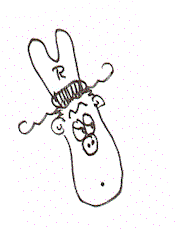
An original Rob Peck drawing, "Pecktoon," frequently found on the front of an envelope containing a letter from Rob.